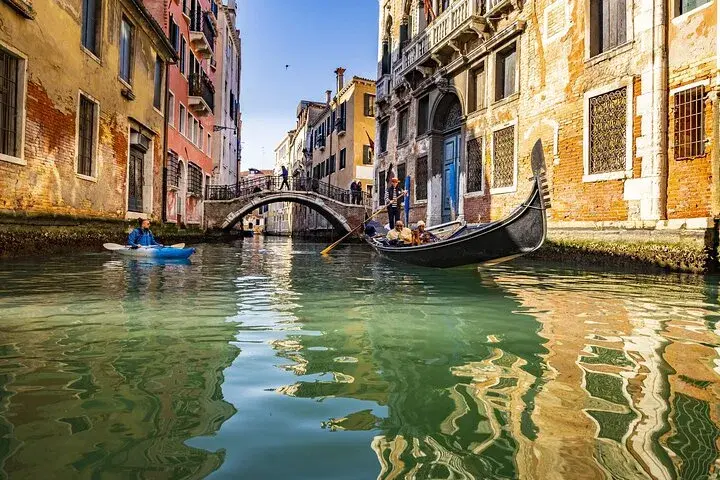
For most travelers, Venice is a beautiful stage set—a maze of narrow alleys and crowded squares to be navigated on foot. But if you pause for a moment on a quiet bank in Castello and look out at the ripples, you’ll realize the secret: Venice was never designed for pedestrians. This is a city that turns its back on the mainland, facing the water with every fiber of its being.
When Europe Was in Flames, the Water Gave Life
To understand Venice, we must forget modern Italy. In the 5th century, "Italy" as we know it did not exist; there was only the chaotic collapse of the Roman Empire. As barbarian hordes—most notably Attila and his Huns—torched cities across the mainland, the old Roman roads became death traps.
In the face of this destruction, a small community made a radical choice. They sailed where no one else dared to go: into the salty, unpredictable marshes of the lagoon.
This wasn't just an escape; it was the birth of a new civilization. While feudal lords across Europe built thick stone walls to isolate themselves, the Venetians used the water as their shield—and their gateway. Venice did not become just another "Italian city." It became the Serenissima, the Most Serene Republic. It was a sovereign maritime empire that remained independent for a thousand years, with its own currency (the ducat) and a global trade network that the world wouldn't see the likes of again until the birth of the modern internet.
Houses Built for the Water, Not the Streets
If you find yourself paddling through the canals of Cannaregio, notice something: the most intricate decorations, the grandest gates, and the marble steps do not face the narrow alleys (calli). They face the water.
To a land-dweller, water is an obstacle. To a Venetian, water is freedom. The "front doors" of these palaces were the water gates (porta d’acqua), where ships arrived laden with spices from the East. Anyone exploring the city only by foot is, in reality, using the "service entrance." The true face of Venice—its elegance and its logic—can only be seen from the level where the foundations meet the salt water.
The Realm of Silence: Exploring Castello and Cannaregio by Kayak
Today, while Venice often groans under the weight of mass tourism, the water remains the only way to reclaim an authentic experience. This is why getting into a kayak in the secluded reaches of Castello or Cannaregio is transformative:
The Elegance of the Glide
Venice was built for efficiency and defense, but the result was one of the most elegant forms of human existence ever devised. Water transport doesn't scar the environment; it doesn't vibrate; it doesn't kick up dust. It flows.
When you take to the lagoon today, you aren't just practicing a sport. You are joining a 1,500-year-old rhythm. You begin to understand that the water doesn't separate us; it connects us. The most beautiful city in the world wasn't meant to be conquered by foot—it was meant to be understood through the gentle pull of the tide.
When Europe Was in Flames, the Water Gave Life
To understand Venice, we must forget modern Italy. In the 5th century, "Italy" as we know it did not exist; there was only the chaotic collapse of the Roman Empire. As barbarian hordes—most notably Attila and his Huns—torched cities across the mainland, the old Roman roads became death traps.
In the face of this destruction, a small community made a radical choice. They sailed where no one else dared to go: into the salty, unpredictable marshes of the lagoon.
This wasn't just an escape; it was the birth of a new civilization. While feudal lords across Europe built thick stone walls to isolate themselves, the Venetians used the water as their shield—and their gateway. Venice did not become just another "Italian city." It became the Serenissima, the Most Serene Republic. It was a sovereign maritime empire that remained independent for a thousand years, with its own currency (the ducat) and a global trade network that the world wouldn't see the likes of again until the birth of the modern internet.
Houses Built for the Water, Not the Streets
If you find yourself paddling through the canals of Cannaregio, notice something: the most intricate decorations, the grandest gates, and the marble steps do not face the narrow alleys (calli). They face the water.
To a land-dweller, water is an obstacle. To a Venetian, water is freedom. The "front doors" of these palaces were the water gates (porta d’acqua), where ships arrived laden with spices from the East. Anyone exploring the city only by foot is, in reality, using the "service entrance." The true face of Venice—its elegance and its logic—can only be seen from the level where the foundations meet the salt water.
The Realm of Silence: Exploring Castello and Cannaregio by Kayak
Today, while Venice often groans under the weight of mass tourism, the water remains the only way to reclaim an authentic experience. This is why getting into a kayak in the secluded reaches of Castello or Cannaregio is transformative:
- The Perspective: From the water’s surface, the city becomes monumental. Here, you truly feel the weight of the "inverted forest"—the millions of wooden piles that have held this miracle aloft for 1,500 years.
- The Soundscape: The noise of the crowds vanishes. You hear only the dip of your paddle and the gentle slap of the tide against ancient brickwork. This is the Venice known to the Doges and the merchant princes.
- Real Life: In the inner canals of Cannaregio, you still see locals unloading supplies from their boats or hanging laundry over the water. Here, the water isn't a postcard; it’s the natural medium of life.
The Elegance of the Glide
Venice was built for efficiency and defense, but the result was one of the most elegant forms of human existence ever devised. Water transport doesn't scar the environment; it doesn't vibrate; it doesn't kick up dust. It flows.
When you take to the lagoon today, you aren't just practicing a sport. You are joining a 1,500-year-old rhythm. You begin to understand that the water doesn't separate us; it connects us. The most beautiful city in the world wasn't meant to be conquered by foot—it was meant to be understood through the gentle pull of the tide.